
Home / Products / Antioxidants & Eye Health / Resveratrol
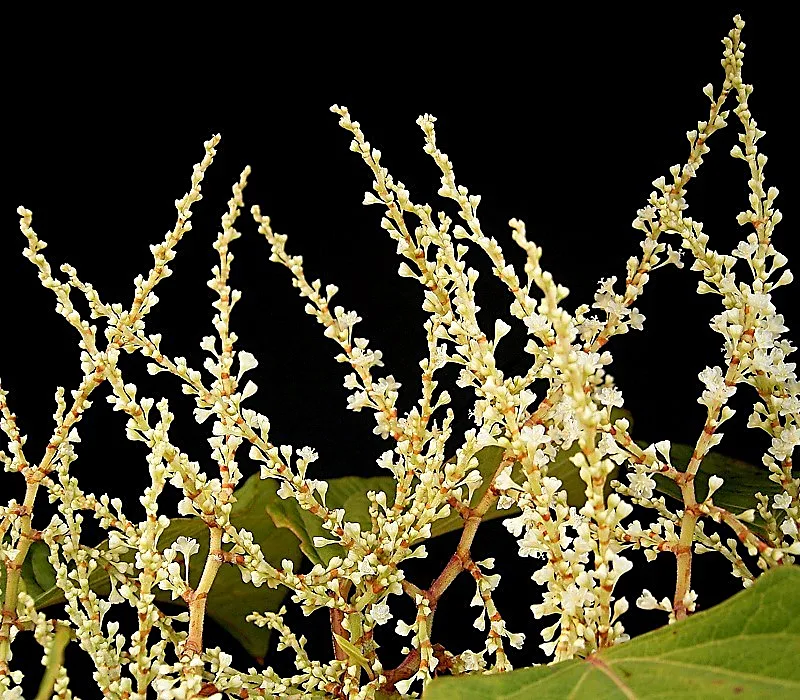
Photo: Wikimedia Commons by Frank Vincentz (CC BY-SA 3.0)
Resveratrol
Japanese knotweed extract standardised from 10% to 99% trans-resveratrol, a staple antioxidant for supplement formulations.
At a glance: Japanese knotweed extract standardised from 10% to 99% trans-resveratrol, a staple antioxidant for supplement formulations.
| Source | Polygonum cuspidatum |
|---|---|
| Part used | Root and rhizome |
| Form | Powder |
| Specification | Resveratrol 10–99% · HPLC |
| Test method | HPLC |
Specification
| Product | Resveratrol |
|---|---|
| Botanical / source name | Polygonum cuspidatum |
| CAS number | 501-36-0 (trans-resveratrol) |
| Specification | Resveratrol 10–99% · HPLC |
| Appearance | White to off-white fine powder (98% grade) |
| Form | Powder |
| Plant part / source | Root and rhizome |
| Solubility | Practically insoluble in water; soluble in ethanol |
| Test method | HPLC |
Grades & forms
Resveratrol 10–99% by HPLC. Common commercial grades: 50% and 98% (minimum 98% trans-resveratrol by HPLC for the high-purity grade). Store protected from light — the trans isomer converts to cis-resveratrol under UV.
Resveratrol 10–99% by HPLC; the common commercial grades are 50% and 98%, with the high-purity grade specified as minimum 98% trans-resveratrol.
How to use — formulation notes
Specify trans-resveratrol: UV light converts the trans isomer to the cis form, and the two isomers must be separated by HPLC to confirm the declared content. Native resveratrol has low water solubility — about 0.03 g/L — but dissolves in ethanol, so standard powder suits capsules and tablets while beverages need a dedicated delivery system such as a cyclodextrin complex or lipid carrier. It is degraded by light, oxygen and heat, and is more stable in mildly acidic conditions, so process and pack it protected from light and oxygen. Store the powder cool, dry and sealed in opaque packaging.
It is often compared with Lutein & Zeaxanthin and Quercetin & Rutin in the same Antioxidants & Eye Health range — see the related products below — and the Reading a botanical extract COA: what buyers should check before ordering guide in our News & Blog covers how buyers compare grades like this one.
Applications
- ✓Supplements
- ✓cosmetics
Typical uses are listed from the company catalogue. Confirm the grade, the permitted use level and the local rules for your target market before launch.
In the finished product
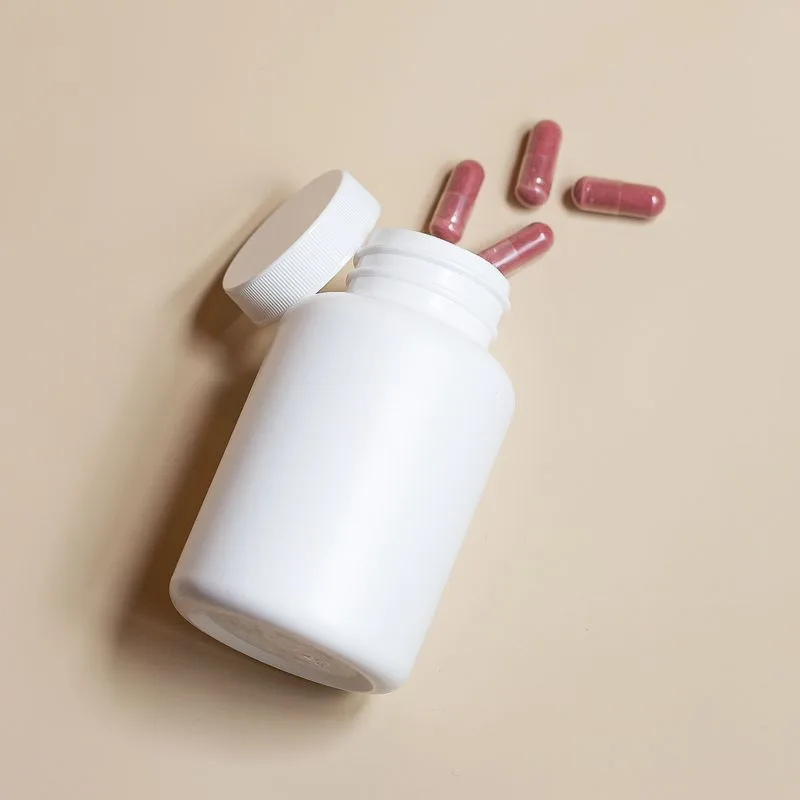
White supplement bottle with pink capsules spilled on a beige surface — a typical application for this ingredient.
- Certifications (ISO, Halal, Kosher, Organic, cGMP) — scope to be confirmed; not claimed on this site
- MOQ, packaging, lead time and price — To be confirmed; ask sales
- Loss on drying, heavy metals, pesticide residues and microbiological limits — confirm on the batch COA
Frequently asked questions
Trans or cis resveratrol?
Trans-resveratrol is the stable, active isomer. Ask for the trans content specifically, and for storage protected from light.
What is emodin, and why is it on the COA?
Emodin is a related constituent of Polygonum cuspidatum. High-purity grades limit it (typically ≤0.5% at 98%). Ask for the emodin result on the COA.
What is the difference between 50% and 98%?
The 50% grade is a commodity extract; the 98% grade is a purified, crystallised product. They are priced and dosed very differently — do not compare them by weight alone.
How do I know I am getting trans-resveratrol, not cis?
Ask for an HPLC assay that separates the trans and cis isomers — a single unresolved UV peak cannot prove trans content. The COA should state the trans-resveratrol result and the method used, and the material should be stored and shipped protected from UV light.
Can resveratrol go into a beverage?
Not as standard powder: native trans-resveratrol is poorly water soluble and degrades in light and at higher pH. Beverage formats need a delivery system such as a cyclodextrin complex or lipid carrier, plus light-blocking packaging. Confirm the grade and use level for your application.
What should the COA show for resveratrol?
The trans-resveratrol assay by HPLC, with trans and cis reported separately, plus the usual identity, loss on drying, heavy metals, residual solvents and microbiology results. For Polygonum cuspidatum material, also ask for the emodin result. Confirm the limits on the batch COA.
Specification basis: Public catalogue cross-check 2026-11-24 — trans-resveratrol CAS 501-36-0, 98% HPLC, emodin limit; PlantExtract.pdf — Polygonum Cuspidatum Extract. Figures are typical catalogue values; the batch COA is the binding document for the lot you receive.
Formulation notes — sources:
- ACS Omega — RP-HPLC method for trans-resveratrol, low solubility, degradation by light, oxygen and heat, UV-induced isomerisation to cis — https://pubs.acs.org/acsodf/article/10/51/62543/3660557/Development-and-Validation-of-RP-HPLC-Method-for
- Scientific Reports (Springer Nature) — resveratrol low water solubility, UV isomerisation of trans to cis — https://link.springer.com/article/10.1038/s41598-025-08665-0
- Resveratrol beverage formulation and stability — trans/cis identity, acidic pH protection, light- and oxygen-aware packaging — https://nulixir.com/insights/resveratrol-beverage-formulation-stability/
Related products
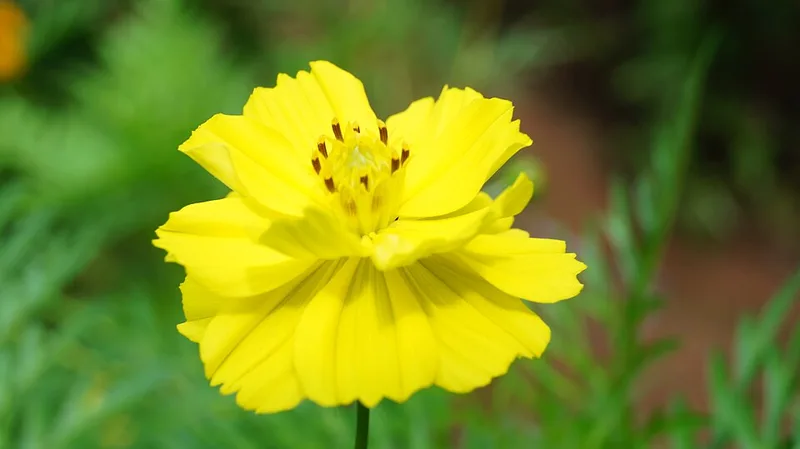
Lutein & Zeaxanthin
Tagetes erecta L. (marigold)Lutein 5–90% powder · CWS 5/10% · Beadlets · Oil 10–30% · Zeaxanthin 5–70%View product →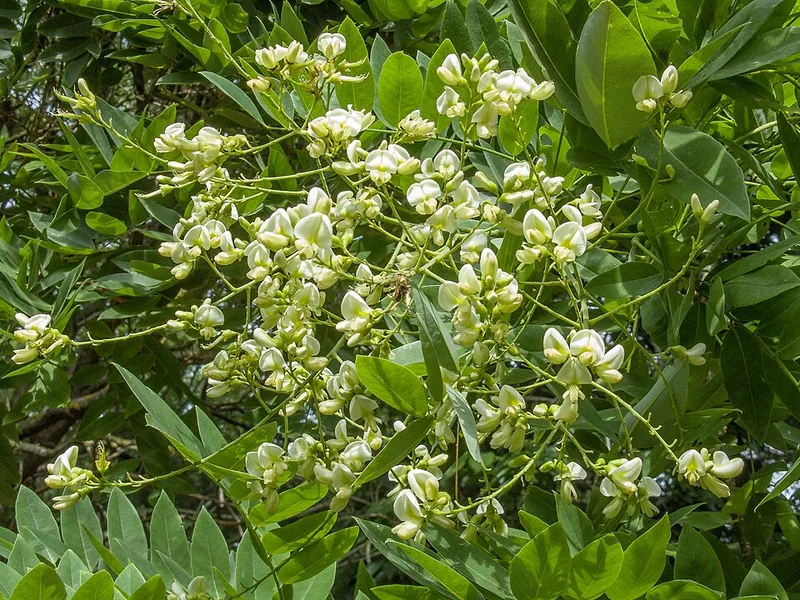
Quercetin & Rutin
Sophora japonica L.Quercetin 95% HPLC · Rutin 95% UV-VISView product →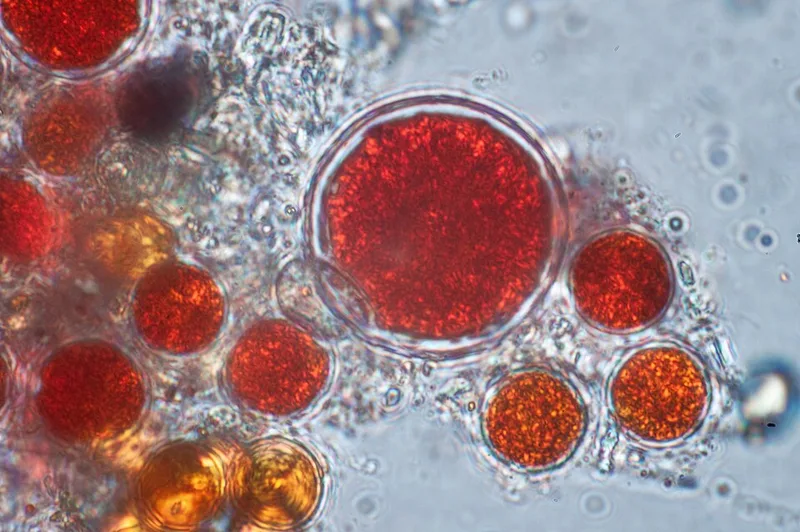
Astaxanthin
Haematococcus pluvialisPowder / oil — grade on enquiryView product →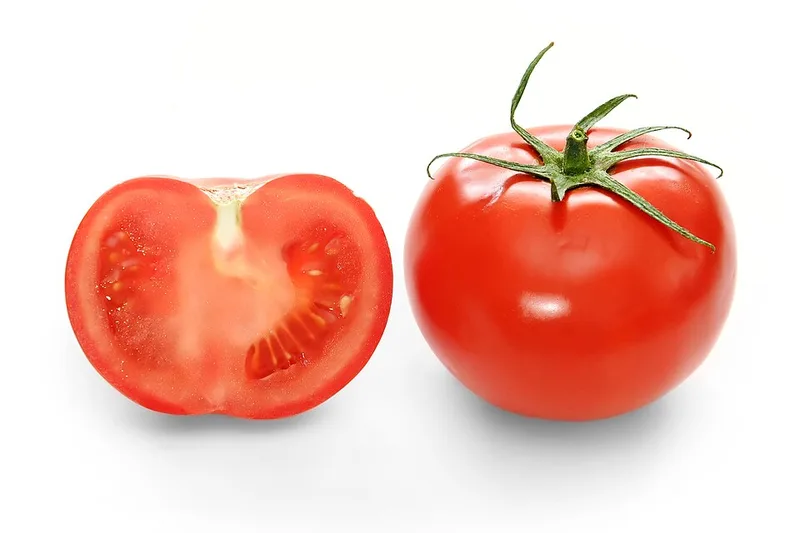
Lycopene
Solanum lycopersicum (tomato)Powder / oil — grade on enquiryView product →Further reading
See Reading a botanical extract COA: what buyers should check before ordering in our News & Blog — it links to this product and to the grades most often compared with it.